
Floristry Courses
Advanced Floristry Course Online
Everyday floristry, weddings and events, and the business behind them.
Our most complete floristry program. Learn retail floristry from first principles, then plan and build ceremony, bridal and reception flowers. A professional kit, tutor feedback and business training are all included.
- 100% online
- 4 core modules
- self-paced
- 12 months' access
- Tutor support 6 days a week
- Certificate + transcript
- Floristry kit included
What is Advanced Floristry?
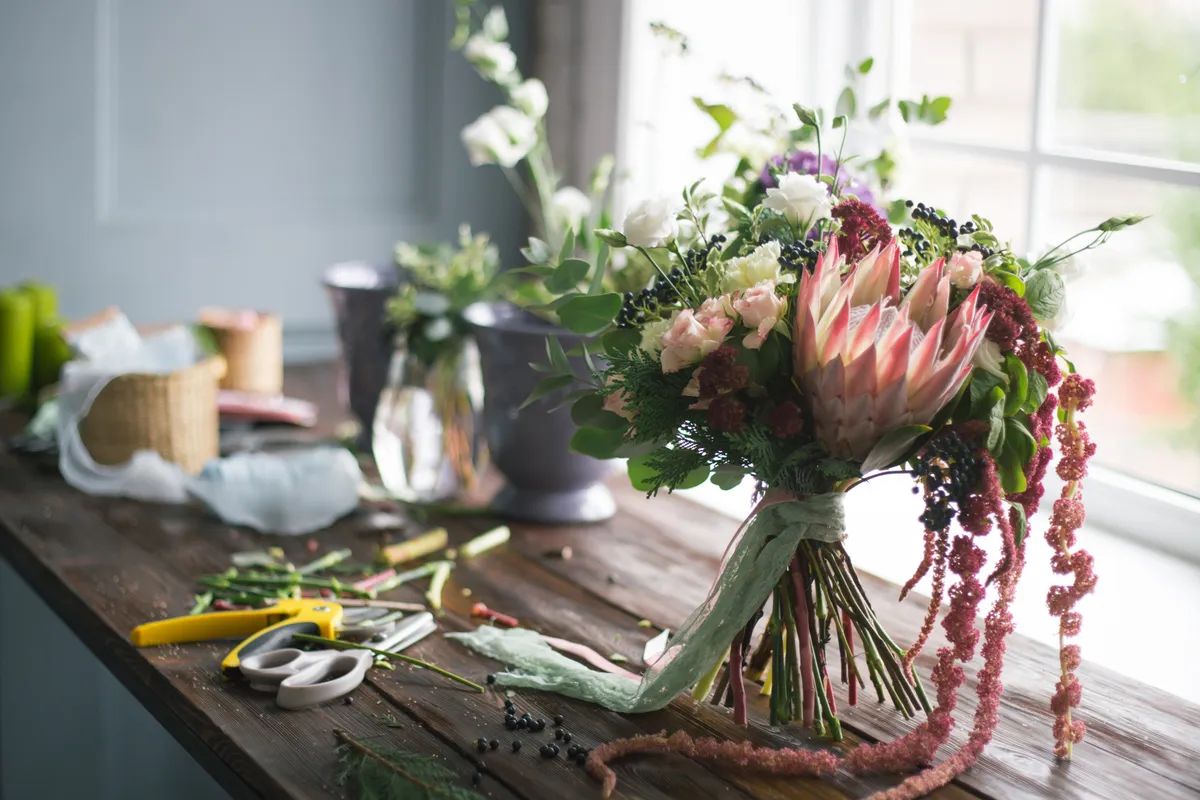
The Advanced Floristry course is our most complete online floristry program. It combines Professional Floristry (FLP-401) with Wedding & Event Floristry (FLW-402), plus small-business and social media training. You'll learn everyday retail floristry first, then how to consult on, plan, cost and deliver wedding and event flowers. A professional floristry kit is included.
Course overview
From the shop counter to the wedding arch
Want the skills to fill a daily order book and take on weddings as well? Advanced Floristry covers both kinds of work: the everyday arrangements that walk out of a shop, and the larger, planned work of weddings and events. You learn the foundations first, then specialise, then build a business plan around it.
- Foundations done properly – Colour, design principles, flower identification and conditioning, then hand-tied, foam, chicken-wire and wired construction.
- Run a wedding from enquiry to pack-down – Consultations, mood boards, proposals, budgets and project schedules, then venue bump-in and bump-out.
- Build at event scale – Ceremony arches, aisle décor and hanging pieces; bridal bouquets and personal flowers; centrepieces, long-and-low table arrangements and installations.
- A business that can carry both – Brand and niche, a business plan, bookkeeping and tax set-up, and social media marketing for your floristry work.
Want the full skill set in one enrolment? Advanced Floristry is it.
Who this course is for
- Beginners who already know they want to do weddings, but need the foundation design skills first.
- Career changers planning to work in a florist shop that also takes event bookings, or to go freelance.
- Hobby florists ready to go professional, offering both an everyday range and an event service.
- Stylists, planners and venue staff who want to add floristry to their event work.
What you'll study
You'll start with the Student Induction and the Floristry Student Induction, which get you set up on the learning platform. Then you'll work through four core modules, in this order.
Module 1: Professional Floristry FLP-401 (9 units)
Everything that follows rests on this module. You'll learn the techniques behind everyday floristry and start building your portfolio.
- Introduction to Floristry – the floristry industry, florist roles, flower history and symbolism, careers, and sourcing and buying stock.
- Design Principles, Tools & Materials – colour theory, colour schemes and colour psychology, design principles, and setting up an efficient workspace.
- Flower Identification, Selection and Care – common floristry species, choosing stems for quality, and conditioning.
- Floral Design Techniques – core construction skills, including wiring and taping.
- Hand-tied Arrangements – bouquets and posies built with the spiral technique, then wrapped.
- Base Medium Arrangements – foam and chicken-wire work in vases, bowls, pots and wreath rings.
- Wired Arrangements – corsages, buttonholes and flower crowns.
- Wedding and Event Floristry – an introduction to themes, client needs and wedding flower budgets.
- Business Fundamentals – your niche, brand story, logo and professional identity.
Module 2: Wedding & Event Floristry FLW-402 (6 units)
The specialist half. Three theory units take you through the business of an event, from first enquiry to bump-out. Three practical units have you build ceremony, personal and reception florals.
- Event Coordination and Client Relationships – handling enquiries, working with planners or direct clients, consultations, mood boards, budgets and winning approval for your proposal.
- Planning and Executing the Client's Vision – venue analysis and floor plans, Australian seasonal planning, project schedules, purchase lists and budget tracking.
- Sourcing & Logistics – buying, transporting, processing, hydrating and storing stock, then running bump-in and bump-out on the day.
- Ceremony Arrangements – arches, aisle décor, hanging and vertical arrangements, and garlands.
- Personal Florals – bridal bouquets and the flowers the wedding party wears and carries.
- Reception and Event Florals – centrepieces, long-and-low tables, multipurpose pieces and large-scale installations.
Module 3: Floristry Social Media Marketing (5 interactive units)
Five short interactive units on marketing a small business through social media, which you'll apply to your floristry work.
Module 4: Floristry Small Business Kickstarter (6 units)
With retail and event skills in hand, set up the business that sells them.
- Your Business – map your idea and write a business plan.
- Market Research – understand your customers, competitors and market.
- Preparing for business and putting plans into action – practical set-up.
- Admin – Record Keeping/Bookkeeping – the records you'll need to keep.
- Accounting and Taxes – ABN, GST and tax for a small business in Australia.
- Start the business – launch steps.
How you'll learn and be assessed
- Practical, tutor-marked work – across both floristry modules you build arrangements and submit photo or video evidence with written tasks. Your tutor marks each one with personalised feedback.
- A real wedding, start to finish – Wedding & Event Floristry follows a case study of a real wedding florist's job from enquiry to event day, plus a behind-the-scenes video of a real wedding.
- Knowledge checks – online quizzes along the way. The business module uses self-assessed planning tasks.
- Competency-based – if an arrangement isn't quite there yet, your tutor explains what to change and you resubmit. There are no exams to sit in a centre.
Your professional floristry kit
A professional floristry kit is included and delivered to your door (tracking sent within about 3 weeks of enrolling). It includes secateurs, flower snips, rose stripper, pliers, floral and bind wire, floral foam bricks and a wreath ring, ceramic vase and pot, posy boxes, ribbons, wrapping papers and cello, pearl pins, chicken wire, cut-flower food, an apron and a floristry tool bag, plus a sketch pad and colour pencils. Fresh flowers and foliage aren't included. You'll source seasonal stems locally, and the course shows you how to choose and condition them.
Tailor your course with add-on modules
Make the program fit your plans. You can tailor Advanced Floristry with add-on modules from our catalogue to pick up extra skills that match your business or career plans.
Horticulture 2 – Plant Data
Go deeper into plants: taxonomy and botanical names, edible and ornamental plant types, propagation, growing environments and the rules behind commercial horticulture. Handy when a couple asks for a bloom that's out of season: botanical names, plant families and growing environments help you suggest alternatives, and give you a head start if you plan to grow your own event stems.
Horticulture 3 – Health & Welfare of Plants
Diagnose and manage plant health: pests, diseases and weeds, natural and chemical controls, integrated pest management, environmental impacts and safe work practices. Worth adding if you hold stock for big events, grow your own, or sell potted plants, so you can spot pests, disease and damage early.
Ask a course consultant about adding modules when you enrol.
Career pathways and earning potential
Advanced Floristry covers both sides of the trade: retail and event work. Roles graduates often explore include:
- Retail and event florist – everyday shop orders, plus preparing and installing flowers for weddings and functions. Median $62,500 a year (advertised full-time salaries for florists), SEEK.
- Wedding and event florist – consulting, designing, building and installing event flowers, in a studio or freelance. There's no separate salary data for wedding florists; SEEK lists weddings as a top florist skill.
- Floristry studio owner – running a business that combines an everyday range with a wedding and event service.
Figures are advertised salaries (SEEK, Jora) or median full-time earnings (Jobs and Skills Australia), accessed October 2026. Pay varies with experience, location and employer. Figures are a guide only.
Some employers ask for the nationally accredited Certificate III in Floristry. Advanced Floristry is a non-accredited, practical program.
Course details
- Study mode
- 100% online, self-paced
- Core modules
- 4 (plus Student Induction and Floristry Student Induction)
- Study time
- self-paced
- Access
- 12 months
- Support
- tutor support 6 days a week
- You'll receive
- Certificate of Completion, Certificate of Attainment and transcript
- Kit
- professional floristry kit included, delivered to your door (fresh flowers not included)
- Payment
- upfront or interest-free payment plan
Download your Advanced Floristry brochure
See all four modules, the kit list and your payment options in one place.
Frequently asked questions
Choose Advanced Floristry if weddings and events are part of your plan. Both courses include Professional Floristry FLP-401, the business and social media modules and the floristry kit. Advanced adds the full Wedding & Event Floristry module: six more units of consultation, planning, logistics and event-scale design. If you only want everyday floristry for now, Professional Floristry covers it.
More questions? See our full FAQs or speak to a course consultant.
Related courses
Professional Floristry
Floristry
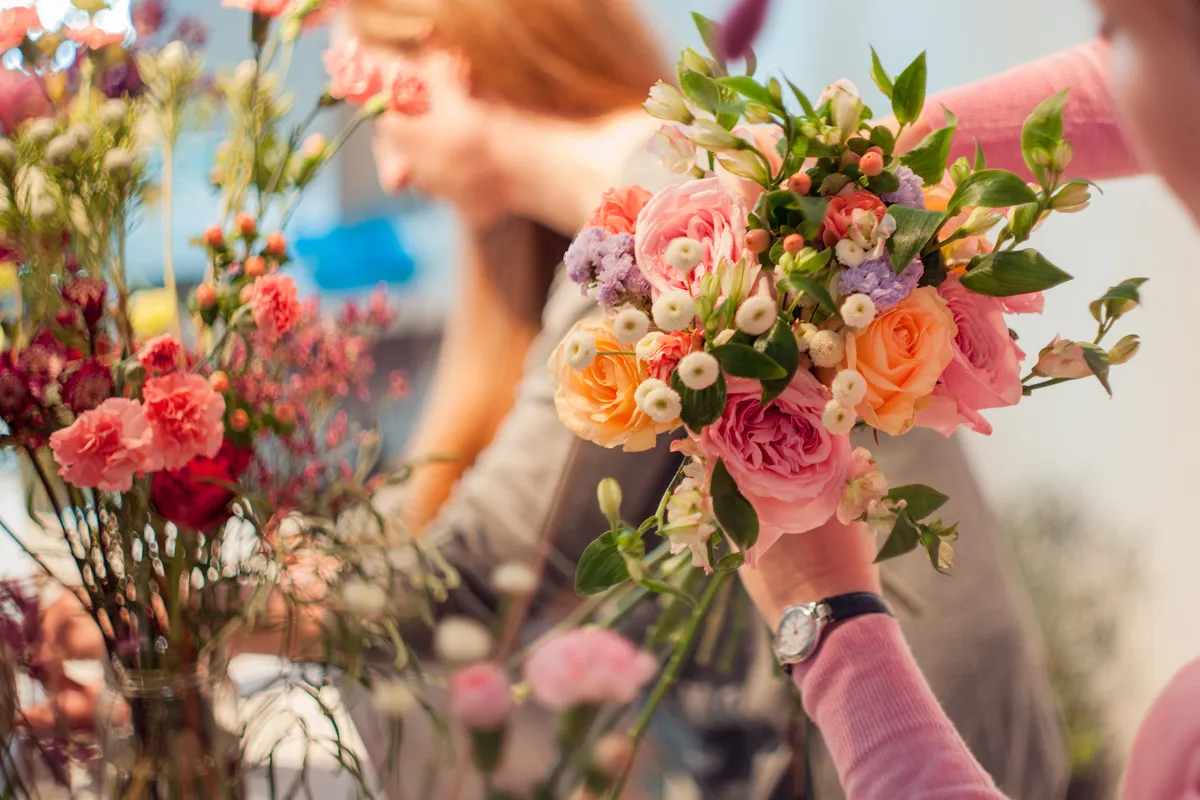
The foundation course on its own, if weddings aren't in your plans yet.
Floristry · 3 core modules · approx. 15–20 weeks at your own pace
View course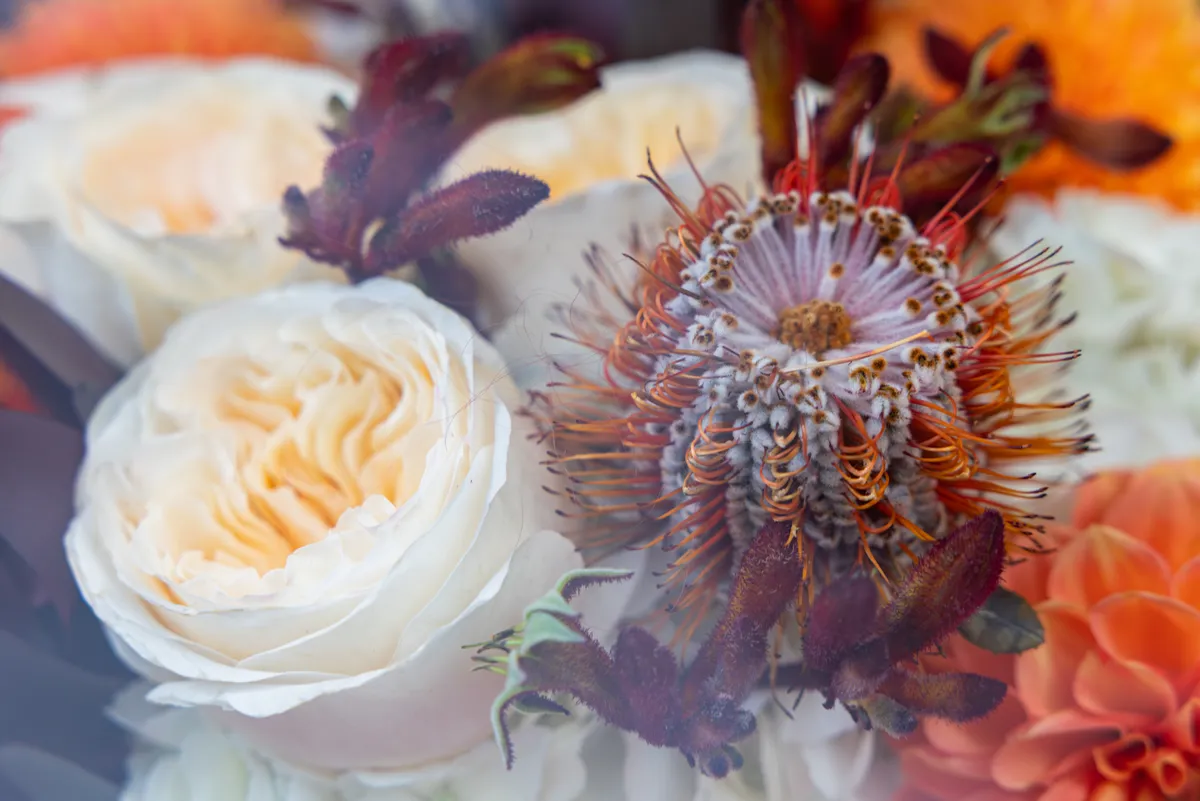
Wedding and Event Floristry
Floristry
The event module on its own, for florists who already have the foundations.
Floristry · 3 core modules · approx. 15–20 weeks at your own pace
View courseCertificate in Horticulture Business
Horticulture & Landscaping
More depth on starting and running a plant-based business.
Certificate · 2 core modules · approx. 200 hours
View courseReady to learn every side of floristry?
Talk to a course consultant about Advanced Floristry and whether the full program suits your plans.