
Horticulture & Landscaping Courses
Certificate in Landscaping (Online)
Design, plan and build gardens that suit the site.
Learn the design process landscapers use, from site analysis and concept plans to materials, planting and managing a landscape project, all online and at your own pace with a tutor marking every assignment.
- 100% online
- 2 core modules
- approx. 200 study hours
- 12 months' access
- Tutor support 6 days a week
- Certificate + transcript
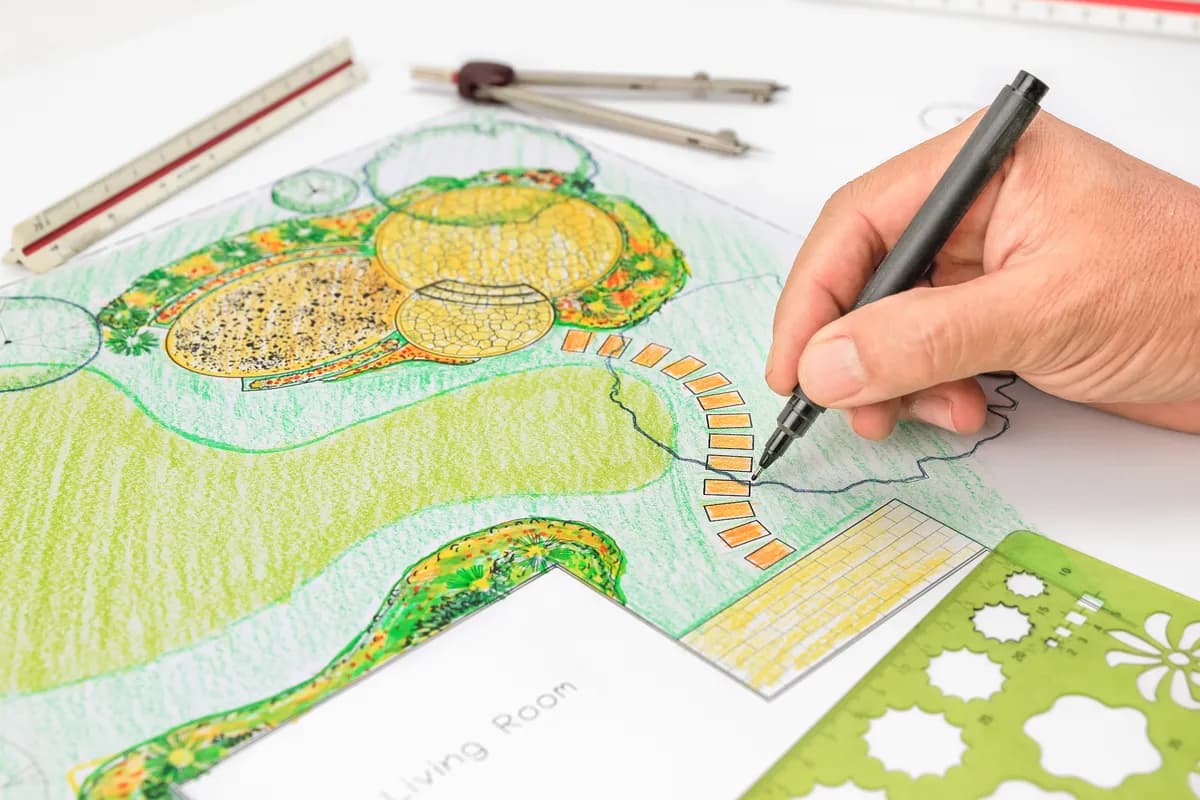
What is the Certificate in Landscaping?
The Certificate in Landscaping is a self-paced online landscape design course covering the full process of creating a garden or park. Across two modules (Landscaping I and Landscaping II) you'll learn design procedure, drafting, construction basics, materials, planting with trees and ground covers, and managing landscape projects. It suits aspiring landscapers, garden designers and property owners.
Course overview
From a bare block to a finished landscape plan
Looking at a bare backyard, a sloping block or a tired public space and picturing what it could be? This course teaches you to turn that picture into a plan someone could build. You'll learn the elements and principles of design, how to draw and specify it, which materials and plants to use, and how to manage the job.
- Design with a process – Collect pre-planning information, apply landscape elements and principles, and develop concept plans and detailed planting plans.
- Draw and specify – Learn drafting techniques, specifications and construction details for timber work, steps, retaining walls, paths and play structures.
- Choose materials and plants – Work with surfacings, hard and soft materials, trees, ground covers, bulbs and annuals, and design for low maintenance.
- Fix problem sites and run the job – Treat slopes and difficult areas, then plan and manage a landscape project from start to finish.
Ready to design outdoor spaces people want to spend time in? Your landscaping course starts the day you enrol.
Who this course is for
- Aspiring landscapers and garden designers who want to work for a landscaping firm or start their own design business.
- Tradespeople and gardeners adding design and planning skills to their construction or maintenance work.
- Homeowners and acreage owners planning a major garden makeover, a sloping block or a low-maintenance yard.
- Nursery and garden centre staff who want to advise customers on garden layout and plant placement.
What you'll study
You'll start with a short Student Induction module that sets you up on the learning platform and introduces your tutor. Then you'll work through two core modules, 22 lessons in all.
Module 1: Landscaping I (approx. 100 hours)
The design-led half. You'll learn how a landscape is planned, the history and styles that shape gardens, and how to design home gardens and public parks.
- Basic Design Procedure A – collect pre-planning information and apply landscape elements and principles.
- History of Gardening – garden styles and themes, influential designers and their influences.
- Drafting & Contracting – drawing techniques, specifications and construction details.
- Basic Landscape Construction – timber work, steps, retaining walls, paths and play structures.
- Surfacings – concrete, asphalt, gravels, mulches, grasses and managing gradients.
- Furnishings & Features – seating, statues, birdbaths and other features, and designing them safely.
- Park Design A – what makes park design good or bad, and recreational landscaping.
- Home Garden Design – what makes home garden design good or bad.
- Design Procedure B – develop concept plans and detailed planting plans.
- Park Design B – develop a park design, including fun and fitness trails.
Module 2: Landscaping II (approx. 100 hours)
The build-and-plant half. You'll choose materials and plants, work with walls, fences, paths and slopes, and finish by developing a full landscape plan and managing the project.
- The Garden Environment – the site conditions, such as climate, soil and aspect, that shape a landscape.
- Landscape Materials – choosing hard and soft landscape materials.
- Using Bulbs, Annuals and other Low Growing Plants – seasonal and low planting in a design.
- Landscaping with Trees – selecting and placing trees.
- Ground Cover Plants – using ground covers for coverage, erosion control and low upkeep.
- Walls and Fences – boundary and retaining structures.
- Paths and Paving – designing and building paths and paved areas.
- Treating Slopes and Other Problem Areas – handling slopes, drainage and difficult sites.
- Garden Features – water features, structures and focal points.
- Designing for Low Maintenance – reducing ongoing upkeep through design.
- Developing a Landscape Plan – producing a complete landscape plan.
- Management of Landscape Projects – scheduling, costing and running a landscape job.
How you'll learn and be assessed
- Online, in your own time – ebooks, self-assessment tests and assignments are on the learning platform 24/7, on any device.
- A written assignment for every lesson – 22 assignments across the two modules, each marked by your tutor with personalised feedback.
- Design work you can keep – you'll develop concept plans, detailed planting plans and a complete landscape plan, which can form the start of a design portfolio.
- Competency-based – if an assignment isn't quite there yet, your tutor tells you what to improve and you resubmit. There are no exams to sit in a centre.
Tailor your course with add-on modules
Make the course fit the kind of landscaping you want to do. Any certificate can be tailored with add-on modules from our catalogue, so you can strengthen the plant and soil knowledge behind your designs.
Horticulture 1 – Introduction to Horticulture
The foundations of horticulture: plant identification, choosing plants for climate and site, water and irrigation, soils, pests and diseases, propagation and garden care. Helps you choose plants that will actually thrive in the gardens you design.
Horticulture 2 – Plant Data
Go deeper into plants: taxonomy and botanical names, edible and ornamental plant types, propagation, growing environments and the rules behind commercial horticulture. Lets you write accurate planting schedules using correct botanical names.
Horticulture 3 – Health & Welfare of Plants
Diagnose and manage plant health: pests, diseases and weeds, natural and chemical controls, integrated pest management, environmental impacts and safe work practices. Useful if you'll maintain the landscapes you build, or offer maintenance contracts.
Soil Management
Get to know your soil: classification, properties and plant nutrition, soil testing, degradation problems like erosion and salinity, and practical soil management, finishing with your own soil investigation. Every design sits on soil, and this module helps you assess it before you plant or build.
Ask a course consultant about adding modules when you enrol.
Career pathways and earning potential
Landscaping skills are used by landscaping firms, garden designers, nurseries and councils, and by people who run their own design-and-build businesses. Roles graduates often explore include:
- Landscape gardener – building and planting gardens for a landscaping firm on domestic or public projects. Median advertised salary $82,500 (SEEK).
- Garden designer – preparing concept and planting plans for homeowners, often within a landscaping or nursery business. Median advertised salary $83,750 (SEEK). Employed designer roles generally ask for qualifications in landscape design.
- Landscaping business owner – running your own garden design, makeover or landscaping business. Income depends on the business.
Figures are advertised salaries (SEEK, Jora) or median full-time earnings (Jobs and Skills Australia), accessed October 2026. Pay varies with experience, location and employer. Figures are a guide only.
Structural landscaping is licensed in some states: in Queensland, a QBCC licence is needed for structural landscaping work valued at $3,300 or more, and in NSW a licence is needed for residential building work valued over $5,000.
Course details
- Study mode
- 100% online, self-paced
- Core modules
- 2 (plus Student Induction)
- Study time
- approx. 200 hours at your own pace (most students finish in 10–15 weeks part-time)
- Access
- 12 months
- Support
- tutor support 6 days a week, by phone, email or video call
- You'll receive
- Certificate of Completion, Certificate of Attainment and transcript
- Payment
- upfront or interest-free payment plan
Download your Certificate in Landscaping brochure
See all 22 lessons, how assessment works and payment options in one place.
Frequently asked questions
No. The course starts with basic design procedure and teaches drafting techniques as you go, so you don't need any design, drawing or landscaping experience. You also don't need your own garden. Where an assignment asks you to design for a site, you can use a backyard, a friend's property or a public space you have access to.
More questions? See our full FAQs or speak to a course consultant.
Related courses

Certificate in Horticulture
Horticulture & Landscaping
Build the plant knowledge behind good planting design.
Certificate · 2 core modules · approx. 200 hours
View courseCertificate in Horticulture Business
Horticulture & Landscaping
Learn to research, start or buy a business if you plan to work for yourself.
Certificate · 2 core modules · approx. 200 hours
View course
Certificate in Nature Park Management
Horticulture & Landscaping
Take your park design skills into reserves, trails and natural areas.
Certificate · 2 core modules · approx. 200 hours
View courseReady to design your first landscape plan?
Talk to a course consultant about the Certificate in Landscaping and how it fits your career or property plans.